

B2B data cost efficiency has become one of the most overlooked levers in modern revenue operations. The average B2B company now spends $178,000 annually on data solutions and subscriptions; 34% more than three years ago, while pipeline velocity has dropped 8% and conversion rates have flatlined.
In a benchmark study conducted in 2025 among 150 data-driven B2B organizations, it was discovered that only 28% of firms which had a 42% rise in data expenditure were able to improve their revenues per sales rep. This is not an execution failure. It is a structural one.
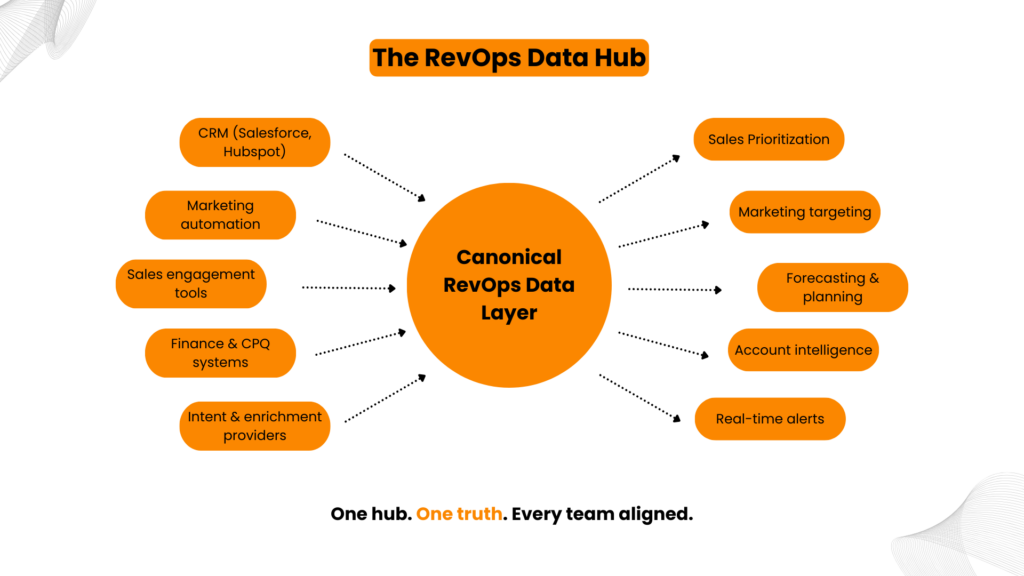
The B2B data market has expanded into a fragmented ecosystem where the average company manages 15 or more separate data vendors. When 72% of sales teams pay for data features they never activate and 76% of RevOps organizations do not track revenue impact by data source, the problem is not a lack of information. It is a lack of efficiency.
The core issue: organizations optimize for data volume while ignoring data utility, activation rates, and alignment with actual go-to-market (GTM) execution.
Why Higher Data Spend Kills B2B Data Cost Efficiency
Each of these failure modes degrades B2B data cost efficiency in a distinct way.
The Three Recurring Failure Modes
Higher spend concentrates around three recurring failure modes, each compounding the others.
Redundant vendor purchases inflate costs without expanding coverage. Most revenue organizations run six to twelve data tools simultaneously: a primary database, enrichment API, technographic layer, intent platform, email verification service, and point solutions for specific verticals. These platforms frequently pull from the same upstream data brokers. A 2025 analysis of 40 sales-stack audits found that 73% of companies had at least two independent enrichment vendors, and 56% had two or more intent platforms. Yet only 31% could confidently identify which vendor drove materially better outcomes.
One middle-tier SaaS firm with Cognism, ZoomInfo, and Apollo running simultaneously saw that 47% of its target account contacts were common to all three platforms. The combined annual spend on these tools totaled $143,000. The unique coverage achieved because of this overlap: 8%. The additional spend amounted to $67,000 annually with zero pipeline value.
The Utilization and Alignment Gap
Low activation rates silently destroy ROI. The industry average for database utilization sits at 12% to 18%. Organizations purchase enterprise licenses based on projected coverage needs but activate only a fraction. A healthcare technology firm was able to quantify this in great detail – its $92,000 yearly investment in enrichments equated to 840,000 API calls. Post-enrichment analysis revealed that 340,000 API calls were enriching contacts who were scoring below the client’s minimum ICP threshold, and 190,000 calls were enriching contacts tagged “do not contact” or in dormant segments for 18 months. Utilization: 37%
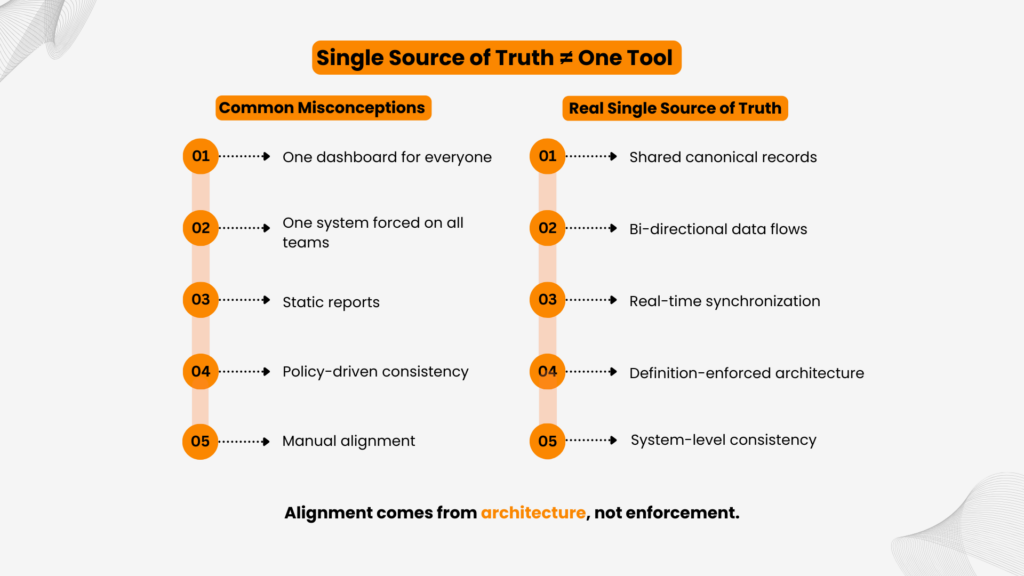
GTM misalignment converts quality data into expensive noise. Data purchases often proceed independently of strategy changes. Sales teams buy databases optimized for outbound at scale while the company pivots to account-based strategies. Marketing acquires intent signals for accounts that SDRs are not assigned to. When data outputs live in dashboards instead of playbooks, routing rules, or performance targets, spending on data without changing behavior changes nothing.
Volume vs. Accuracy: The Data Efficiency Trade-Off That Shapes Pipeline ROI
The instinct to purchase larger databases is understandable but consistently counterproductive. Volume creates an illusion of capability while masking the cost of poor quality.
Consider two scenarios. A company with 80,000 CRM records spending $90,000 annually on data, with a typical usability rate of 35%, pays $3.21 per usable record. A smaller database of 40,000 records with 55% usability costs just $2.50 per usable record. Volume is not value. It is a larger surface area for the same underlying problems.
This trade-off intensifies with intent signals. Intent data is one of the biggest drivers of modern data spend and one of the least efficiently used. Organizations ingest thousands of unstructured third-party signals weekly without internal filters. An enterprise software firm might receive an alert that a target account is searching for “cloud security,” but if the provider cannot identify which business unit is executing that search, sales teams cold-call generic contacts. The result is low conversion, wasted capacity, and data spend that drives activity without driving revenue. You can read more here.
High-accuracy, lower-volume datasets consistently outperform high-volume generalized databases in pipeline contribution. One financial services company spent $67,000 on an 18,000-contact healthcare vertical database. Six months later, it generated $180,000 in pipeline from 11 accounts, all of which were already known and engaged. Meanwhile, their underfunded enterprise motion produced $4.2M in pipeline from a $12,000 investment in executive intent data targeted at existing customers in expansion phases. Precision won by a factor of 35 on pipeline ROI.

The Data Activation Matrix: Measuring B2B Data ROI Across Every Vendor
Most organizations lack formal efficiency metrics for data investments. That gap prevents optimization. Three metrics, tracked together, that form the foundation of any B2B data cost efficiency framework and expose where value erodes.
Cost Per Usable Record (CPUR) reveals the true price of quality. The formula accounts for total investment against records that actually meet accuracy and delivery standards:
CPUR = (Tool Cost + Labor Cost + Decay Cost) / (Number of Records * Usability Ratio)
An organization investing an extra $14,000 in tools for improving data quality but lowering the cost associated with labor by $10,000, as well as boosting usability from 55% to 78%, will lower its cost per record usage from $2.50 to $1.89. This is compounding data infrastructure.
Cost Per Activated Account (CPAA) measures GTM alignment. For an account to count as activated, it must enter a meaningful sales motion, not just exist in a list or scoring dashboard. This metric exposes inefficiencies where data is purchased at scale but activation rates remain low, or where one vendor shapes actual plays while another is ignored despite similar contract value.
Pipeline Impact Per Dollar of Data Spend is the most strategic metric and the hardest to calculate. It requires tagging pipeline by data source and comparing performance against a baseline. Organizations that attempt this consistently find that a minority of vendors drive the majority of incremental pipeline, and that some high-cost “table-stakes” products produce no measurable lift when removed.
A useful triage framework maps vendors across two dimensions: value (pipeline generated per dollar) and efficiency (CPUR or CPAA). Vendors that are low-value and low-efficiency are candidates for elimination. High-value but low-efficiency vendors merit closer scrutiny and usage optimization. High-value, high-efficiency vendors deserve consolidation of spend and negotiating leverage.
Four Shifts That Recover 25-40% of Wasted Data Spend
Organizations that improve B2B data cost efficiency follow a consistent approach.
Focus on a core-with-specialties approach. Replace the patchwork of multi-vendor systems with a layered approach consisting of one general vendor that provides coverage overall, plus one or two specialty vendors with differentiating capabilities such as deep verticals, international reach, or intent signals. By focusing on two vendors as opposed to seven, a logistics software company was able to lower its costs from $156,000 to $89,000 while improving contact uniqueness coverage by 12%.
Route inbound leads through a low-cost validation layer first: check for valid email format, filter personal domains, remove duplicates. Only verified enterprise leads proceed to premium API enrichment. This ensures high-cost API credits are spent on viable, sales-ready opportunities rather than junk sign-ups or personal email addresses.
Build performance-based vendor evaluation into renewal cycles. Measure accuracy rate, data freshness, and pipeline correlation for every vendor, updated quarterly. Vendors scoring below a defined threshold enter performance review. Vendors that cannot demonstrate measurable pipeline contribution should not receive automatic renewals. This approach prevents incumbent inertia, the tendency to renew underperforming vendors due to switching friction.
Embed data into GTM workflows rather than adjacent to them. Scoring, routing, sequencing, and playbooks must be driven by data, not informed by it after the fact. A 2025 case study found that a 25% increase in the fraction of SDR time spent on data-driven accounts led to a 19% increase in pipeline per salesperson with no change to the underlying data budget. The efficiency gain came from usage, not volume.

Data Cost Efficiency Is the GTM Competitive Advantage
The modern GTM environment is not short on data. It is short on economically effective intelligence systems.
Organizations that keep increasing their number of records, suppliers, and data signals without getting better at activating and making decisions based on data will experience increasing expenses and inconsistent commercial results. Organizations focused on B2B data cost efficiency; not just data volume, consistently recover 25-40% of wasted spend.
The recovered capital, often $50,000 to $150,000 annually, funds higher-impact revenue initiatives with measurable ROI.
Data cost efficiency is not a procurement metric. It is a revenue strategy. The question is not whether your data budget is large enough. It is whether your data investment is actually changing decisions, improving execution, and driving pipeline that closes.