
Author Archives: Daniel George

AI as Service

AI as Service (AIasS)

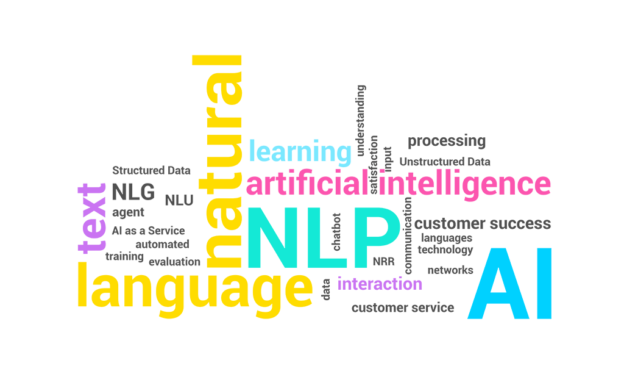
Its worth a need of time that the machine should be get ready to do their task on there own as per the standard instruction set which is currently trending as AI. We have been trying to bring that on over last decade in many possible sectors as we can and up to some extend it is and no doubt it will continue the trail. One of these possible sectors is marketing. Well said that the steady sustainable relationship must be maintaining with the customers because they are the potential key to business advancement ahead. To serve this purpose the CRM plays crucial role in building sustainable relationship by query resolving, better software maintaining, updating validated contacts, excellent cloud service etc. Using this AI technology, businesses can achieve a more complete view of each customer than has ever been possible previously, usually harnessed through a customer relationship management (CRM) platform, AI tools can collect and analyze customer data across all channels, learn insights, predict outcomes, and recommend — or even perform — next steps. But what makes it more reliable and faster?  is the intelligence we provide to work out this whole process, and this leads AI as a part of Service (AIasS) to the CRM. . CRM plays strategy for managing a company interaction with client and sales prospects ensuring the contact sustain through relation. There are various preferable Customer Relationship (CRM) in market from which Salesforce a Cloud Computing platform is the leading, providing great services like

Marketing Cloud

Sales Cloud

Community Cloud

Commerce Cloud 

Service Cloud

Analytics Cloud

Salesforce Einstein:

Salesforce Einstein is the AI tech which is built for the Salesforce itself for the significant enhancement in its Customer Success Platform. Its becomes the part of all the cloud services provided by the salesforce. Salesforce Einstein is a Smart Assistance provided to the CRM which eventually helps you better to understand the organization and interact more effectively with the customers.  Einstein smart assistance with the Salesforce makes its Customer Success Platform strong enough to learns from all that tremendous amount of data it receives, it will deliver predictions and recommendations based on your unique business processes. Applications can be listed as follows:

Sales Cloud Einstein

Service Cloud Einstein

Marketing Cloud Einstein             

Commerce Cloud Einstein

Community Cloud Einstein

Analytical Cloud Einstein

Sales Cloud Einstein:

AI has enlightened the sales sector with the absolute accurate availability, reliability and with actions to be done with zero complexity time speed. This makes a real significant difference in the following process:

Automated Contacts Updation.

Provides information to help prioritize leads and opportunities better

Offers recommendations to help close deals faster

Finds important news and data that affect specified customers

Service Cloud Einstein:

Einstein Service Cloud ease the process of reaching out and knowing better process with organization to a great extent, where customer can initiate the communication over that they get personalized support over digital channel like chatbots with no time and space boundaries, Also with Service Cloud customer service software, you can increase service agent efficiency by creating call center scripts, building knowledge centers for better customer experience.

Marketing Cloud Einstein:

As Marketing is done in order to pull out all the resources through branding with various social medias where customers really get to know the better features, growing reliable connection through communication, running online campaigns all for to provide an excellent marketplace to a product. So, what does Einstein does?  It all starts with them the Customers and will continue as long the business stays.

Einstein Listen to customers and engage with them across every channel: email, social, web, and mobile.

Automate and manage every campaign, publish content, analyses results, and optimize as per the actions taken.

Commerce Cloud Einstein:

The Commerce are undoubtedly related to the online shopping business world. The effort will be towards making the shopping experience less hectic and merrier than ever by keeping trails over the search criteria, providing predictable solution, and improving the search dictionary in order to avoid “no result” criteria. Features that can be summarized as

Einstein Product Recommendations:

Create unique customer experiences across mobile and desktop with personalized product recommendations that eliminate manual merchandising and boost revenue per site visitor.

Einstein Predictive Sort:

Help shoppers find what they are looking for faster by personalizing search and category page results to each customer, whether they are known or unknown.

Community Cloud Einstein:

Einstein eventually benefits the community by making the efforts of tracking and targeting the potential customers more convenient due to automation which becomes the great deal in making the resources members need easy to find — automatically suggest relevant experts, groups, and content based on interests, needs, and behavior from their social activities.

Analytical Cloud Einstein:

It basically works on the concept of analysis, which involve search criteria predictions till the marketing and selling process.

Analytical Cloud Einstein find patterns in your data so you can predict future trends and always know the next best sales, service, or marketing action

Find insights in millions of data combinations by automatically examining all variable combinations — eliminate the trial and error of hypothesis-driven analysis
Database Marketing

Benefits of Database Marketing!

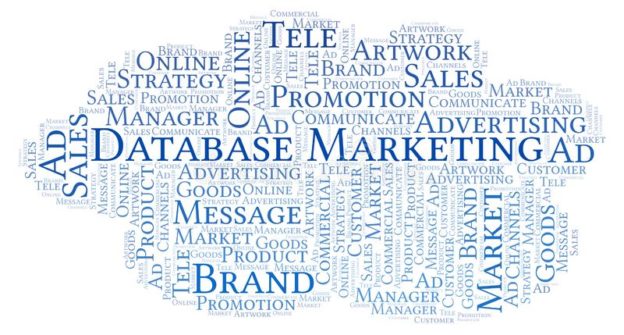
The word itself is very deliberative to the mutual collaboration between data research along with maintenance with business infrastructure expanding. It is being online trend growing as fast as can to have healthy business relationship between the organization and the clients including excellent marketing and selling strategies with targeted potential customer network. Database marketing is a form of direct marketing. It involves collecting customer data like names, addresses, emails, phone numbers, transaction histories, customer support tickets, and so on. This information is then analysed and used to create a personalized experience for each customer

A Brief role played by Database marketing

Database marketing is the most efficient way to generate personalized communications in order to promote a product or service for marketing purposes.

It is a data presentation on the basis of real time clients updation.

Beneficial in lead generation through better prediction of customer along with marketing behavior.

The database marketing can be summarised as:

Content Creation

Audience Targeting

Campaign Automation

Track and optimise

Integrated CRM data

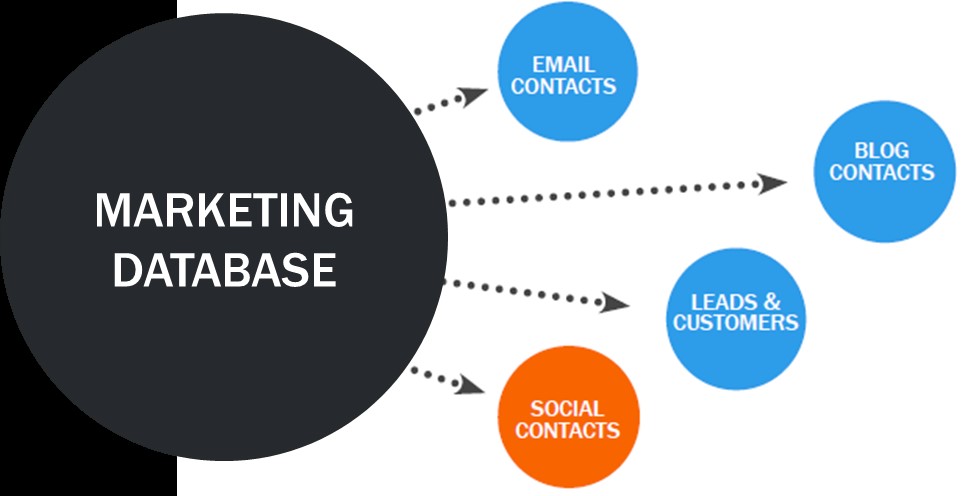
The term database itself consist of vast amount of data  which is to be marketed worldwide so the core of this marketing is the content which we use of absolute accuracy and absolute accuracy in data leads to substantial growth in business world, that means the data we are dealing with should be with valid context whatever we use like contact details, email details or the designation details. So the very first step will be the content creation, the data we filter with validate context and real time updating facilities this also be called as content creation in first place, as per the requirement the data is pulled out of an database by applying proper search criteria, after this the targeted audience get tracked down in the potential marketing with using the search criteria we prefer along with response in return. Afterwards campaigns are run in order to hit the targeted sales, along with campaign running the customer data  are tracked and optimised for the successful lead generation, at the end the data is integrated with CRM, as CRM is ongoing excellent solution provider for maintaining online customer relationship by providing various platform for clients, so that they can user friendly interact with the organisation. CRM software can automatically update profiles when customers enter new information, and online tools can protect against data decay by integrating with your software and updating each contact as they browse your website with activity data. The content mainly is a composition of the contacts details from various online medias categorised as

Email contacts

Blog Contacts

Leads and Customer

Social contacts

Email Contacts: The influence holds up by email marketing becoming a buzzword and its trending due to its most effective and efficient way of communication leading to the right amount of sell among the targeted potential customers just need to be absolute product oriented with no irrelevant description. Also, about 60 % of preferred promo channels is occupied by email marketing which means consumers subscribe to a brand’s list to get promotional messages which eventually leads to the lead generation and greater business development.     

Blog Contacts: well the technology oriented blog leads you to the technology awareness among the customers which is being part of your organization leading you to healthy business relationships leading you to the lead generations and its becoming the great way of database marketing, we can advertise, we can share the concept behind the upraising of the product, we can deliberately have client’s poles ,we can dig deeper with social media to know the influential ongoing this, also to know the market flow and what’s makes you persistent in the marketing field.

Leads and Customers: Social media makes it easier than ever to get detailed insights into your customers’ interests, perspectives, and life updates. Effective personalization is about providing a relevant message to an interested audience — not proving how much personal data you have. Collecting and analysing customer data is just the first step. You must act quickly enough to capitalize on a customer’s interest in and interactions with your brand.

Social Contacts: By handling a firm contribution behind the database marketing, social contacts make one of its inseparable part of this worldwide ongoing trade. The social media influences the brand, which is the big deal in this field, how the client approaches the product, their reviews become more predictable around the media. So, it’s the necessity of trade, one with excellent social command over the marketing business.

email-marketing tips

Email Marketing – Steps to Increase open Rates

Direct Email Marketing is still a great way to reach out to your audience, to grab their attention and to connect with them on a personal basis.  The hard part is turning a prospect into a customer and that they read your Emails and not just delete them, all you have is 5 seconds to convince a busy professional that your emails contain something valuable and useable for them.

Packed Data Services has put together a few Tips & Tricks on how to get the best results out of your Email response rate.

1 – Always follow-up your 1st email

The first Email is the one with the highest response rate, but – it is still effective to send follow-up emails. If the first attempt did not get an answer, the second email is likely to get a response.


2 – Subject Lines

Keep your subject line simple and short with a touch of personalization. Remember the Subject Line is the first impression of an Email and not an ad.

3 – Short and Simple

Keep your Emails short and simple – with fewer than 100 words in the body, they tend to perform better in the first and second email. On the third, fourth and fifth attempts, the performance tends to be similar across email length. By your sixth Email, a longer Email tends to increase your response rate to almost 20 percent.

4 – How to personalize and end the emails

Personalization is key. Adding a signature and a signature with your headshot does boost your email response rate. Add your Social Media Hyperlinks like LinkedIn, Facebook, Twitter to your Signature to build a relationship with your audience.

5 – Do not wait to send emails.

Don’t let your potential customers wait. Leads that are less than one week old are most likely to reply. It is best to hit leads while they are fresh to maximize a response.

6 – Give priority to the pain areas

Your first sentence must hook your readers and engage them to read on. Don’t immediately tell them how great you are. Make your first sentence about their needs, issues and pain points and how you can help to improve these.

7 – Know your customers

Reach out to your audience, which is interested in the content of the email you are sending. The more targeted your group is, the better the response rate. Targeting enables you to tailor your message and offer more specifically to the intended audience.

8 – Always put Call-to-action

Show your audience clearly what you would like them to do. Put your call to action clearly to show in your Emails. Keep them short, simple and direct. ‘Sign up’, ‘Subscribe’, ‘Click here’ etc. are a nice and simple call to actions – that will not take up much time of your audience.

Direct mail campaigns can pay off and can give you a high ROI and even a higher ROI than paid ads. You can use them effectively in a single campaign, or alongside a digital marketing campaign.

To stand out in a world where everything has gone electronic, think of your digital-marketing strategy with a direct-mail campaign. Try our Packed Data Services today – to get the best results out of your Email Marketing strategy. 

How-Crucial-Is-Data-Cleansing

The best time to cleanse your data is now!

Across nearly every industry, data has become a key driver for critical business initiatives. At the same time, data will only add value to your business when it is trustworthy and actionable. Companies of all sizes need to be aware of the power and liability of their data and should have a robust and reliable data quality management strategy in place that aligns with the needs of the entire organization.

Databases are highly dynamic, so the quality of a company’s data constantly changes. If you’re not constantly purging the decayed data, it is likely that your data is outdated at a rate faster than you may think.

Most CRM systems are estimated to suffer data decay of 25% to 30% annually. This can cause harm in sales performance and hurt your company in the long run.

Old and inaccurate data can have an adverse impact on results and marketers need to ensure that the data is correct, consistent and useable by identifying any errors or corruptions in the data, correcting or deleting them, or manually processing them as needed to prevent the error from happening again.

While some of data cleaning can be done by software, it must be monitored and inconsistencies reviewed. The manual part of the process is what can make data cleaning an overwhelming task. Therefore data cleaning is imperative and our team at Packed Data Services can help in enhancing your data.

Here are several key benefits that come out of the data cleaning process:

1.It removes major errors and inconsistencies that are inevitable when multiple sources of data are getting pulled into one dataset.

2. Further standardizing the data procured from multiple sources will bring uniformity and will make everyone more efficient since they’ll be able to quickly get what they need from the data.

3. Once the data collection is standardized, then cleansing or removing duplicate data is critical because duplicate data can skew large data sets if they exist within the system.

4. Avoids spending precious time and money in reaching out to invalid emails by removing or updating outdated data. Data usually has a short shelf life since several people change their jobs or their job title gets changed in the same company.

5. Fewer errors mean happier customers and fewer frustrated employees.

6. The ability to map the different functions and what your data is intended to do and where it is coming from your data.

Data enrichment services help organizations take current data, assess its validity, and tweak it to make it more meaningful. You can perform these audits on your own, or you can trust teams like ours at Packed Data Services to enrich your data for you. We can also append your current data with new information, so your team can gain new insights about your prospects. This process will improve the quality of your data-driven marketing and sales.

What is GDPR?

Where are we after a year since GDPR was launched?

What Is GDPR?

GDPR is a series of laws spelling out the digital rights for citizens of the European Union. It builds on an earlier policy, called the Data Protection Directive, which Europe adopted in 1995. Many of the ideas outlined in GDPR came from the earlier regulation, and an even older set of principles called the Fair Information Practices, which covers the ways consumer information should be used. Those practices have also shaped policies in the United States, though the outcomes have differed. The United States has historically regulated privacy in context, with piecemeal laws for the privacy of healthcare records, financial documents, and federal communications. There’s nothing analogous to GDPR in the United States, and likely won’t be any time soon.

In Europe, though, GDPR represents one of the most robust data privacy laws in the world. It also gives people the right to ask companies how their personal data is collected and stored, how it’s being used, and request that personal data be deleted. It also requires that companies clearly explain how your data is stored and used and get your consent before collecting it. “Personal data,” in this case, refers to things like a person’s name, email, and IP address, but also pseudonymized information that could be traced back to them. People can also object to personal data being used for certain purposes, like direct marketing. If you buy a pair of shoes through an online retailer and start seeing ads for similar shoes, you should be able to ask the retailer to stop using your personal data for direct marketing purposes. Under GDPR, those and other rights are guaranteed.

Where are we?

The headline on April 24, 2019 read, “Facebook expects to pay up to $5 billion in fines to FTC for privacy violations.”  Ironically, Mark Zuckerberg, Founder, and CEO of Facebook is one of several business leaders who have been pressuring legislators for more clarity on privacy rights. All businesses, and especially those that sell access to micro-targeted audiences, need clear and consistent regulations.  Aware of widely publicized data breaches, consumers are demanding more control over their private information. So where do we draw the line?  The member nations of the European Union tackled this problem head-on. The resulting General Data Protection Regulation (GDPR) went into effect on May 25, 2018.

With the regulation in place for one-year, European authorities are flooded with reports of data breaches and complaints of mishandling personal data. In just the first 8 months after the law became effective EU citizens reported 59,000 personal data breaches.  The largest penalty to date was for $56 million but many complaints have yet to be adjudicated.

US companies cannot dismiss the GDPR as strictly a European issue. The law also extends to organizations outside of the EU if they offer goods or services to, or monitor the behavior of, EU data subjects. The GDPR serves as a template for similar laws in Brazil, India, and Indonesia and the new California Consumer Privacy act of 2018.  GDPR will affect the landscape of privacy laws and compliance for years to come.

How GDPR is Affecting Email Marketing

The European Union’s General Data Protection Requirement, or GDPR, has been a hot topic since its enforcement date took effect in May 2018. Companies have faced multiple dilemmas: Is their business one that needs to comply with the GDPR privacy law? If so, what is the best way to comply? And how does a business comply without losing valuable customers?

GDPR-compliant businesses of all sizes likely have had much work to do to ensure a smooth transition, and this has impacted how many companies do business in Europe. There’s no avoiding the effects this requirement has on marketing efforts – especially email marketing and mailing lists.

“All marketing activities are likely to be affected by the GDPR in one way or another – that much is obvious,” said Nik Mehta, Director Sales at Packed Data Services. “That said, we see GDPR having an exceptionally large impact when it comes to email marketing.” Email marketing is a common advertising tactic that has been easily implemented in the past. But after GDPR, it’s another area of business that requires careful consideration.

For instance, companies need to ensure their contacts gave them consent before continuing to send emails to them. This calls for a stricter subscription process, which should involve double opt-ins and easy opt-outs, and exclude involuntary or required opt-ins.

Double opt-ins confirm that users are interested in receiving emails, weeding out any fraudulent or accidental requests (e.g., failure to uncheck an automatically checked subscription box.) If a consumer provides their email for a subscription, they will have to go into their email and agree to it for a second time.

This requirement acts as a safety net for any business sending marketing-related emails. Anyone subscribing to your emails should be able to do so freely and not feel bribed to do so for a particular product or service. They should also be able to unsubscribe from your email list at any time, and with no repercussions.

When someone gives consent, make a note of it so you have the information recorded and readily accessible should there be any issues later.

“Organize a full information audit and review the existing data you have, paying particular attention to where this data came from and who you’re sharing it with,” said Nikhil Mehta “If you’ve been marketing to an email list that you obtained using methods that are noncompliant [with] GDPR, you should no longer reach out to individuals on this list, unless they’ve double-opted into your communications.”

Bad Data Vs Good Data

Good data isn’t cheap. But bad data is even more expensive!

There are various methods for marketing but the most favorite one of marketers is Email Marketing. The backbone of email marketing is data. Not just data, but good data!

Bad data costs the United States more than $3 trillion per year according to Thomas Redmond. In a Harvard Business Review (HBR) article published in 2016, he explained it this way, “salespeople waste time dealing with erred prospect data and data scientists spend an inordinate amount of time cleaning data.

Data bought from large directories, where the validation process is not very accurate can create a big chunk of bad data in your CRM. Data entry errors are not the only problem and sometimes the data is out of date too, considering that decision makers often change jobs. This results in personalized or automated emails being incorrectly targeted, making bad data expensive.

According to another report by SiriusDecisions, there’s a simple formula for understanding the cost of bad data: It costs $1 to verify data as it’s entered; $10 to cleanse and de-dupe each error that slips through; and $100 per error to operate a system with bad data.

Given that between 10% and 25% of the typical B2B database is incorrect, that’s some pretty chilling math. 

Thus, making sure that the data is clean and compatible can have a huge impact on a team’s results by, “weeding out less reliable data points and helping to filter through the noise to spot the prevalent trends.”

Packed Data Services helps marketers address a good part of the “simple data” problem by providing clean, fresh, basic CRM data including phone numbers and email addresses that are verified via a combination of software tools and human curation.  For any data requirements please email us at [email protected]

Email marketing not dead

Email marketing is not dead! Its alive kicking and even stronger!!

There are myths and then there are MYTHS! the one we are talking about is, email marketing is dead as a goose and people hate being marketed to via email.

Ask marketers and they will tell you probably the best way to engage with customers is through social media (Facebook, Instagram) for instance. It is where the millennials are congressing. Let’s address some of these myths with a few statistics.

Average usage by age group in US:

Age group % usage
15-24 91%
25-44 93.4%
45-64 90.5%
65+ 85.5%

Despite a plethora of social media apps, the millennials and all generations are actually using email.

Usage is fine, what about conversion? isn’t social media the holy grail? Wrong again, here’s another myth buster.

For the “Big 3” of social media (Facebook, Instagram, and Twitter), the engagement rate isn’t even 0.6%. Compare that to email’s average open rate of 22.86% and even its click-through rate of 3.71%.

Now that we are all on the same page due to some eye-opening myth busters, how is email marketing evolving and developing?

Email marketing’s biggest advantage remains that it is non-intrusive, it’s not like an ad that comes in between when you are watching your favorite videos. Its great strength can also become its greatest weakness, as customers have the chance to ignore your email completely.

It is our responsibility to make the content more relevant for a positive reception from the audience. Just bombarding the audience with plethora of emails to stay relevant is not enough. The emails have to be engaging and rewarding for the audience. Everytime you create an email campaign, and send it to your target audience, have one rule to check – What is the audience gaining from the email?

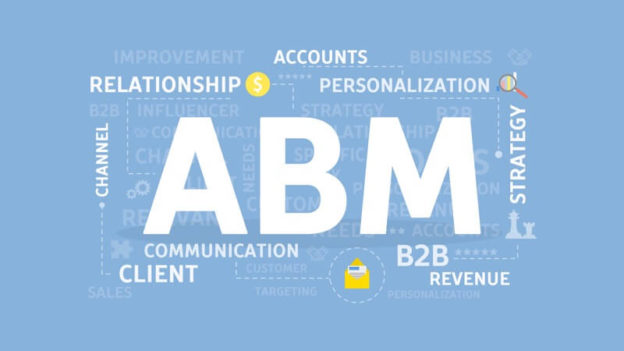
Relevance is the key word, account-based marketing (ABM) is one of the model ways to reach out to B2B customers. This means the content not only has to be relevant but also consistent and constant messaging are the other two pillars for successful engagement.

The key to conversion or CTR always remains being there at the right time, since we cannot envisage when a business need arises, we address that through constant, consistent and relevant email communication.

This means constant email campaigns and a regular dosage of quality lead list. Step 1 is to get the data set right, verified leads provide higher CTR and also make the effort in content creation worth it. The right kind of company to get your lead generation right and which understands your needs properly is pivotal for successful email campaign.

If you have the lead list right, then congrats Step 1 is complete and you are ready for my next blog. Else don’t fret reach out to us and we will assist you in Step 1.

What is Step 2? One line – Don’t be an email marketer, be an email concierge!! Coming soon!!

10 Key benefits for doing Outbound Sales Emails

What are the benefits of email marketing? If your company or business isn’t utilising email marketing, should they? The answer is probably yes, as email is consistently cited as one of, if not the marketing channel that consistently delivers the highest ROI.

Email marketing is used by thousands of businesses of all sizes across the globe. Those who are unfamiliar with this method of marketing may not immediately understand why it is so popular amongst companies in a variety of industries – but here are ten reasons why email marketing is seen by many as the most effective marketing channel.

10. Low costs

One of the most obvious advantages of email marketing is its lower cost compared to mainstream marketing channels. There are no print or postage costs and no fees paid in exchange for exposure on a certain billboard, magazine or television channel. Email marketers might consider investing in specialist software to automate, track and evaluate their emails. Granted, there may be a small overhead for sending thousands of emails at a time, but these costs are far lower than what you would expect to pay using other marketing channels.

9. Reach an already engaged audience

Email marketing is one of the only channels that consumers ask to receive. The majority of businesses using the platform only send messages to those who have signed up to receive them. This can allow for much higher conversion rates as a business is only targeting those who already have an interest in their brand.

8. Deliver targeted messages

Most marketing professionals would happily pay to ensure they were only spending money targeting those who were interested in their brand. Email marketers can go one step further though, by only sending emails to subscribers who meet certain criteria.

If a franchise only has an offer on in certain areas of the country, it can easily arranged for emails to be sent only to those living in certain areas. If there is a sale on sports goods, it can be arranged for only those who have shown an interest in sports to receive an email.

Email list segmentation works fantastically for brands who gain information about their subscribers. Studies have shown that marketers who use this tactic often boast improved engagement rates as a result. The old ‘spray and pray’ method of sending the same email to every subscriber or customer no longer works, and the companies that see the best results from their email marketing are segmenting data and campaigns to ensure that they’re sending the most relevant message to individuals.

7. Drive revenue

Marketing Week reports that email generates around £29bn retail sales annually.

Email marketing is great for taking advantage of impulse buying. There aren’t many other marketing platforms which allow customers to go from witnessing an offer to purchasing an item within two clicks of a button. With a tempting call to action and a link straight to the checkout, email newsletters can drive sales like no other channel.

You’ll find a plethora of information about how you can successfully use psychology in email marketing to help improve your results, including one of our most popular pieces of content – The psychology behind creating successful email marketing.

6. Easy to get started

Email marketing doesn’t necessarily require a huge team or reams of technical nous in order to be successful. It’s certainly possible to jazz up an email campaign with fancy templates, videos, images and logos. Yet, some of the most successful campaigns utilise simple plain text emails, suggesting that it’s the content of an email that is the most important thing.

5. Easy to measure

Another key benefit of email marketing is that it’s easy to see where you’re going wrong. Most email marketing software will allow you to track open, click-through and conversion rates, making it simple to spot how a campaign can be improved. These changes can be made almost immediately too, whereas print or broadcast advertising requires quite a bit of effort to alter.

4. Easy to share

Subscribers can forward brilliant deals and offers to their friends at the click of a button. There aren’t many other types of marketing that can be shared as easily as this. Before you know it, subscribers could become brand evangelists; focused on introducing your business to a new market.

More and more we see brands cleverly utilising this tactic, and social proof has become a huge influence for online selling in recent years.

3. Reach a global audience

What other marketing platform lets you instantly send a message to thousands of people across the world? Sure, social media can help you spread the word amongst a global audience – but there’s no telling who’s actually reading your content.

Alternatively, you can always get hyper local using one of the other ten benefits – segmentation.

2. Instant impact

Due to the immediacy of email, a business can start seeing results within minutes of its emails being sent. A 24-hour sale is a brilliant marketing ploy that can be utilised by email, as it creates a sense of urgency and convinces subscribers to take immediate action. Businesses typically have to wait weeks until they see sales come in as a result of print or broadcast campaigns and, even then, how can they be sure what was responsible for the purchase?

1. Unrivalled return on investment

In the business world, results are arguably all that matters. With this in mind, the main reason that most businesses invest in email marketing is the fantastic return on investment. According to the DMA, the return on investment for email increased from an estimated £30.03 for every £1 spent in 2016 to £32.28 in 2017.

It’s clear to see that email continues to be the most effective marketing channel available to every business. Perhaps it’s time for your business to start making email marketing a priority.

Check out our own email marketing platform and learn how we’re helping thousands of brands deliver big results from email marketing.

NetSuite Users

Everything that you can do being a NetSuite Customer

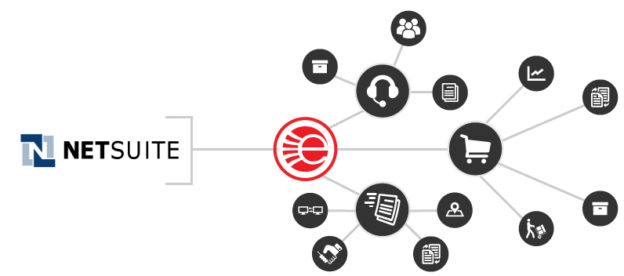
NetSuite software is an online service that integrates the numerous functions of a business, like E-commerce, Supply-Chain Management, CRM, Business Intelligence, Accounting, Inventory Management, Human Resource, into one complete system. It is a cloud-based ERP (Enterprise Resource Planning) which is a business management software used by all kinds of businesses to manage and automate their business by amalgamating all of the information and data in a single and simple platform, which makes the business smooth and less complex. NetSuite Customers are spread all over the world with the United States having 87 percent of them. With over 12,000 customers spread over 100 countries managing their business all over the world with NetSuite, it is a very popular and powerful software with an award-winning financial management system. 

NetSuite users enjoy several advantages and manage their business beneficially by reducing their IT cost by almost 50 percent. The top 9 benefits you get being a NetSuite customer are listed down below.

1) With a balanced and integrated software, NetSuite covers an entire range of solutions customized particularly for individual companies and provides one solution for the entire business. From CRM and eCommerce to Inventory and Advanced Warehouse Management, Services Resource Planning, Human Resources, and Professional Services Automation, NetSuite has it all in one combined suite.

The cloud-based ERP system of NetSuite allows organizations and businesses to manage costs and optimize accounting efficiently, eliminate manual reporting and automate the key processes which are encountered in daily operations.

2) NetSuite has real-time dashboards which help business managers and executives enhance their decisions making capabilities. These customizable dashboards are enjoyed by organizations who are NetSuite Customers which enable them to see the statistics that are most pertinent to them and hence increases visibility. Employees and business executives can spend more time analyzing and acting on data and less time gathering it as the dashboard provides data from all the departments.

3) Huge amounts do not have to be spent on infrastructure and IT staff by small or medium-sized companies who cannot afford to do it as NetSuite is a cloud-based ERP software and has a much lower entry barrier and affordable rates.

4) Operating over the Internet, the NetSuite software can be accessed anywhere and anytime through a web browser or NetSuite’s app. This means the NetSuite customers can have access all day and night, whether they are at home or in the office.

5) With different platforms for different industry sizes, NetSuite has a customizable software which the customers can personalize according to their needs and preferences. Customization and business process management within the NetSuite can be done by using SuiteFlex developer tools. By using this, companies with unique requirements are catered to.

6) One of the most important benefits one can get using NetSuite is its security. While the security of cloud apps has long been a very controversial subject, NetSuite has successfully brought up software with a highly secure platform. Safety being such an important aspect of ERP system, the company has the resources to continue investing in keeping data safe.

7) NetSuite software allows and supports companies to be multinational. It also supports multiple languages as well as multiple currencies which allows the ERP system to be much more feasible to the multinational companies.

8) Being 99.99 percent uptime, NetSuite is extremely reliable as the software balances load very efficiently and minimizes the time taken for updates.

9) NetSuite grows alongside your company. As a company grows, they just have to add additional users to the already existing subscription and minimizes the hassle of managing a large infrastructure change.

There are numerous more advantages experienced by NetSuite users. NetSuite has helped several companies manage their projects and is still continuing to grow gradually and spread its name all over the world.