
Author Archives: Daniel George

Pay-per-click

Difference in B2B vs B2C Sales Cycle for PPC Ads

B2B and B2C have different ways of doing business, which is why the approach to PPC is also different. As consumers, we may research a product or service before purchasing and often do not consult anyone else before buying low dollar items. We click an ad for an item, then purchase immediately or view some reviews first before returning to the site with our credit cards.

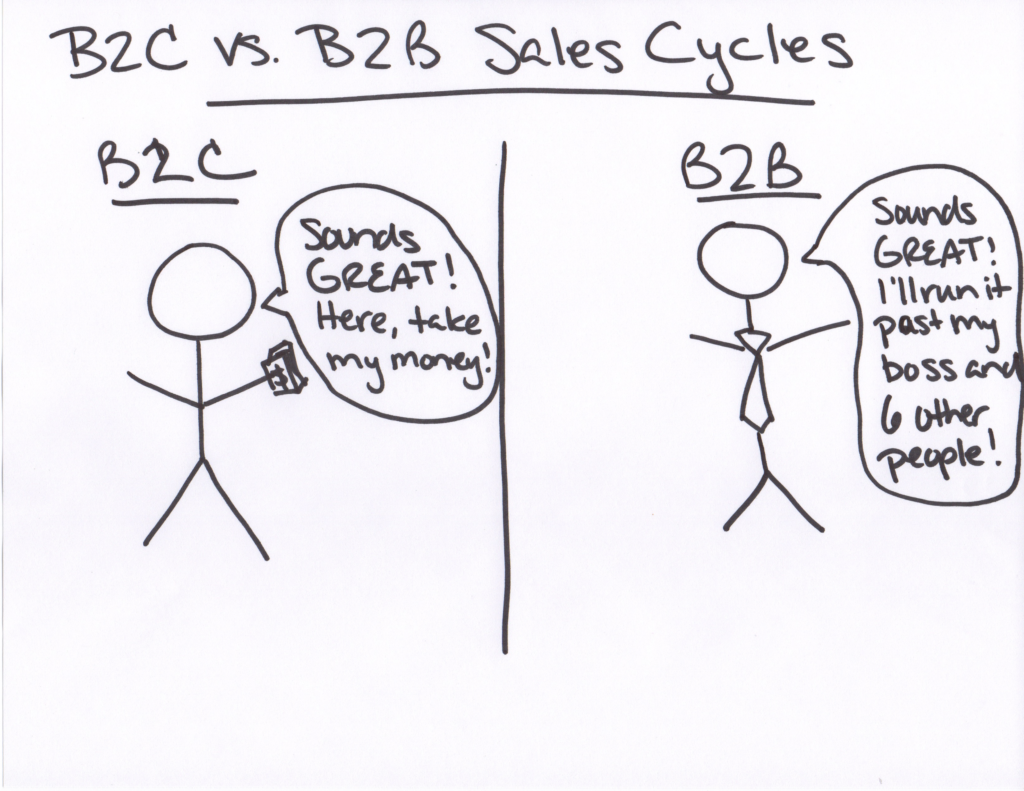
Making a purchase on behalf of a business, B2B, is much more complex involving multiple decision makers and a lengthier period of time before purchasing. Employees at big companies are unlikely to make that $200,000 purchase without involving other decision makers. With big companies and expensive products, more people take part in the review process before that final decision is made so the marketer’s approach to PPC should be different. The below image from Resonance humorously, but accurately, highlights the sales cycle of B2C compared to B2B.
With PPC for business, the goal is more about awareness and making the business aware of your brand so when it comes time for a decision, you are one of the options. It is still important to speak to buyers at the different stages of their journey while also recognizing the person in the initial research stages is not likely to be the decision maker.

Setting Goals & CTAs

A retailer selling clothes to a consumer looks for an immediate buy. This can be conveyed in an ad with a promo code as an ad extension or an offer of free shipping for a limited time with an ad customizer. The ideal scenario is an immediate conversion for an item that may only cost $50 and the goal is for the site visitor to add to cart and ultimately purchase.

A business selling to another business has a different approach with PPC ads. Rather than inviting an immediate purchase, the CTA is much softer, with phrases such as

try us out, get a free white paper, or schedule a demo. The offer will be an exchange of information rather than an exchange of money.

Since the sales cycle is longer, there is a much bigger investment before a purchase will happen and B2B is about capturing and qualifying leads.

B2B Landing Pages

All PPC ads, whether B2C and B2B need corresponding content on landing pages that match the query that brought them there and facilitate lead generation. Appropriate page copy tells visitors that they will receive what was stated in the ad. White the red button above tells a visitor what they can get (an eBook), the site copy should include a description of what that content is eBook is about. Offering a free eBook is not a strong enough offer for someone to part with their business contact information. Equally important it is to be clear about what happens when they exchange information for that eBook. Are they now on a daily email list? Will they be contacted for a sales demo?

Since B2B purchases are complex, there is a temptation for many to highlight all the features of what they sell along on the landing page and include remotely relevant add-ons. Instead, the landing page should guide users toward what they should do right now. Make it easy by reducing noise and distractions. If the goal is an email address in exchange for an eBook, keep the focus on completing that action.

When setting goals for your PPC campaign, if there is a clear case for having two CTAs on a B2B landing page, the primary CTA should be toward the top of the landing page. A secondary CTA provides an opportunity to get something from visitors before they leave the page but should not compete with the primary CTA. People who are not ready to “commit” by providing their phone number and email address for a download may be willing to at least subscribe to a blog. When using a secondary CTA like this, it should be placed lower on the page or be less dominant visually.

Speaking to Emotions vs Logic

All purchases have some emotion behind them and consumer purchases are frequently about how they make people feel. My favorite example on this is Starbucks. They don’t sell coffee. They sell an experience and their powerful brand enables them to charge a premium.
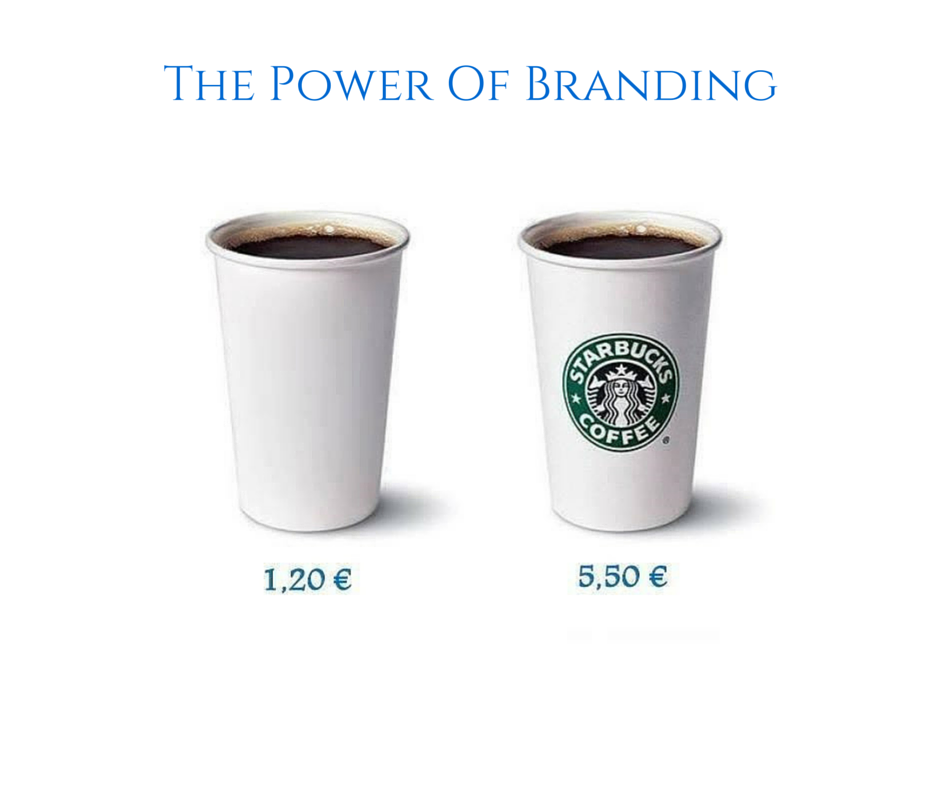
Emotion can still be used with B2B by appealing to an emotional level but it needs to very quickly include logic because of the stakes involved with a B2B purchase. As a consumer, I can take a risk with a $50 purchase from a brand I’m unfamiliar with or a $5 cup of coffee from a brand I know. However, if I had a say in a B2B purchase that may cost my company thousands, or millions, of dollars, my concern is risk aversion more than emotion. As a B2B buyer, I don’t want to be responsible for that much money down the drain.

What emotion can do in the B2B world is convey a company’s values and demonstrate how they can be trusted. This has to do more with data than feelings. Clarity about what the product or service can do is more meaningful than a flashy website and that is what’s more likely to win the battle between logic and emotions. Your B2B landing page must have rational information to back up your emotional appeal.

Tracking Performance of B2B Lead Generation

Remember that people early in the B2B process are not yet ready to make a significant investment, but they may be willing to exchange their contact information for a compelling offer. Because of this, with B2B campaigns, it’s common to not see an immediate ROI in terms of revenue.

But all marketers know it is still important to monitor what it costs to run ads and how many leads were acquired for that amount spent. This includes tracking the total cost, the volume, search impressions share, and CTR, to name a few. For example, if you discover a good CTR, but low conversions, you have data to help you determine whether your offer should be revised.

One you determine which metrics are right for your business, whether it’s for a Saas business, E-commerce or another category, Supermetrics for Google Sheets is one option for removing the manual steps of reporting on your historical data, helping you review leads and opportunities, and guiding you when adjusting your PPC campaigns.
Digital Marketing

How Digital Marketing can help you in Lead Generation?

The changing consumer behavior is dictating new terms for the B2B segment. Succeeding the B2C like ‘experience’ factor, digital marketing is catching up as the new normal for B2B stores. There are several first-level challenges involved in B2B digital marketing. Before expecting any result, these challenges should be addressed. So here we are with a list of challenges that any B2B digital marketing initiative should address and ideas to overcome the hurdles.

As much as the B2C industry, the B2B industry has also started embracing digital marketing as a means to generate leads. B2B players have long understood the need for building organic traffic, heightening digital user engagement, creating a social media bonding and perfecting every other aspect of digital marketing.

In fact, Statista reports that at least 45% of B2B companies have a formal marketing plan in place. At least half of the B2B companies in the United States have earmarked digital marketing budgets to increase their lead generation.

However,digital marketing is no magic wand a quick wave of which will throw open the floodgates of leads. There are several first-level challenges involved in digital marketing for B2B that need to be addressed before results can be seen.

Challenges involved in B2B lead generation using Digital Marketing

The major challenges involved are outlined as under:

Content production

Content is the key asset which helps B2B enterprises drive leads using inbound marketing. But, content production being a relatively new field (hardly a decade old), it can feel a little alien for long-standing B2B enterprises. In fact, the various forms of content required and their purpose itself can feel like a difficult maze in the beginning.

The content produced needs to have a strong message, a compelling tone and it should also address the pain areas of the target audience heads on. Such form of content production and its distribution across online outlets is indeed the toughest challenge in B2B digital marketing.

Forecasting future trends

Five years ago, keyword stuffing was a way of living for SEO professionals. Today in 2018, voice search pegs over and above all other forms of search. The rapid pace at which Internet grows has made it difficult for marketers to forecast how things will be in the near future.

Drawing long-term plans for five years is no longer possible. The best bet that B2B marketers can make it to devise strategies with a long-term vision that will help them achieve short-term goals.

For example, securing top SERPs in a specific region for a given keyword with definite search volume.

Measuring conversions & lead scoring

In eCommerce, conversions mean a successful sale that the customer paid for. But, in digital marketing, across B2B as well as B2C, conversion means something else. In fact, they mean a lot of things, like:

-A Call-to-action clicked and contact form submitted

-Download of gated content like eBook, White paper, Case study, brochure, etc.

-Visit a campaign page routed through a text/display/sponsored ad

-Question submissions in community or Knowledge Base

Each of these preliminary actions has a different weightage of being resulting in a business deal. Sometimes, the lead achieved in different ways may have to be scored for their possibility of turning into a lead. Accurate lead scoring and nurturing them for long-term deals is indeed a challenge in B2B digital marketing.

Integrating marketing automation tools

Blogging. SEO. SEM. Social media. Email marketing. The world of inbound marketing is as vast as you can imagine. Bringing all the tools under one roof and taking the best out of them is a swim against the tide. Hence, the need for marketing automation.

There are several marketing automation tools like HubSpot available today that help orchestrates the entire digital marketing activity from a single dashboard. But, using them for B2B digital marketing is a different story. B2B enterprises rely on an entirely different suite of tools for CRM, Content Management, database management, accounting and so on. Integrating all of these tools with marketing automation tools or vice versa often ends up in a grinding halt.

Data compatibility issues, rogue data, inconsistent data capture, etc. are to be blamed for the difficulty in integration. A possible solution is to cleanse the data before it can be integrated with disparate systems.

As much as the challenges involved, there are also several channels that help negate the challenges involved in acquiring B2B leads using Digital Marketing.

Channels that help negate the challenges

Just like in traditional marketing, the secret to B2B lead generation is being in the right place at the right time and in front of the right kind of people. Digital marketing offers several avenues to do that and in a very specific way.

Here are some channels that help negate the challenges in B2B digital marketing.

Email marketing

Meeting customers in their inboxes is still the best way to get more leads. Email marketing that sends periodical emails to subscriber lists, third-party lists or first contacts is sure to help in nurturing leads for long-term conversions.

Social media

LinkedIn, Facebook, Twitter rein as ideal platforms for B2B marketers to create an online splash. These platforms help accelerate the online presence as well as the gain visibility amid audience who have associated interests, like eCommerce, conversion rate optimization, eCommerce Content Management Systems, digital commerce, etc.

Thought Leadership

B2B buying decisions are usually taken with serious participation from C-level execs. The best way to get the attention of C-level execs is through Thought Leadership in topics of their interest. Blogs, white papers, case studies, and similar gated content can help win the attention of customers as well as turn them into interested leads.

Webinars

According to Digital Doughnut’s State of B2B Lead Generation Report, 59% of respondents agree that webinars are quite effective in lead generation. Webinars are largely created in-house which gives them the credibility and authenticity which is much needed in B2B marketing. Also, webinars can attract a real-time audience who can be later targeted with personalized emails and adverts. Similarly, the on-demand streaming of the webinar video can also be used as gated content for the lead on a later date.

Email Marekting

What are the benefits of Email Marketing?

What are the benefits of email marketing? If your company or business isn’t utilising email marketing, should they? The answer is probably yes, as email is consistently cited as one of, if not the marketing channel that consistently delivers the highest ROI.

Email marketing is used by thousands of businesses of all sizes across the globe. Those who are unfamiliar with this method of marketing may not immediately understand why it is so popular amongst companies in a variety of industries – but here are ten reasons why email marketing is seen by many as the most effective marketing channel.

10. Low costs

One of the most obvious advantages of email marketing is its lower cost compared to mainstream marketing channels. There are no print or postage costs and no fees paid in exchange for exposure on a certain billboard, magazine or television channel. Email marketers might consider investing in specialist software to automate, track and evaluate their emails. Granted, there may be a small overhead for sending thousands of emails at a time, but these costs are far lower than what you would expect to pay using other marketing channels.

9. Reach an already engaged audience

Email marketing is one of the only channels that consumers ask to receive. The majority of businesses using the platform only send messages to those who have signed up to receive them. This can allow for much higher conversion rates as a business is only targeting those who already have an interest in their brand.

It is, of course, possible to send unsolicited email marketing messages, but this is only likely to annoy consumers and result in a damaged brand image. As a company that offers email marketing solution, we strongly suggest that you don’t use purchased lists for your email marketing – the results you’ll see from growing your list and acquiring customers organically will lead for far stronger results.

8. Deliver targeted messages

Most marketing professionals would happily pay to ensure they were only spending money targeting those who were interested in their brand. Email marketers can go one step further though, by only sending emails to subscribers who meet certain criteria.

If a franchise only has an offer on in certain areas of the country, it can easily arranged for emails to be sent only to those living in certain areas. If there is a sale on sports goods, it can be arranged for only those who have shown an interest in sports to receive an email.

Email list segmentation works fantastically for brands who gain information about their subscribers. Studies have shown that marketers who use this tactic often boast improved engagement rates as a result. The old ‘spray and pray’ method of sending the same email to every subscriber or customer no longer works, and the companies that see the best results from their email marketing are segmenting data and campaigns to ensure that they’re sending the most relevant message to individuals.

7. Drive revenue

Marketing Week reports that email generates around £29bn retail sales annually.

Email marketing is great for taking advantage of impulse buying. There aren’t many other marketing platforms which allow customers to go from witnessing an offer to purchasing an item within two clicks of a button. With a tempting call to action and a link straight to the checkout, email newsletters can drive sales like no other channel.

6. Easy to get started

Email marketing doesn’t necessarily require a huge team or reams of technical nous in order to be successful. It’s certainly possible to jazz up an email campaign with fancy templates, videos, images and logos. Yet, some of the most successful campaigns utilise simple plain text emails, suggesting that it’s the content of an email that is the most important thing.

5. Easy to measure

Another key benefit of email marketing is that it’s easy to see where you’re going wrong. Most email marketing software will allow you to track open, click-through and conversion rates, making it simple to spot how a campaign can be improved. These changes can be made almost immediately too, whereas print or broadcast advertising requires quite a bit of effort to alter.

4. Easy to share

Subscribers can forward brilliant deals and offers to their friends at the click of a button. There aren’t many other types of marketing that can be shared as easily as this. Before you know it, subscribers could become brand evangelists; focused on introducing your business to a new market.

More and more we see brands cleverly utilising this tactic, and social proof has become a huge influence for online selling in recent years.

3. Reach a global audience

What other marketing platform lets you instantly send a message to thousands of people across the world? Sure, social media can help you spread the word amongst a global audience – but there’s no telling who’s actually reading your content.

2. Instant impact

Due to the immediacy of email, a business can start seeing results within minutes of its emails being sent. A 24-hour sale is a brilliant marketing ploy that can be utilised by email, as it creates a sense of urgency and convinces subscribers to take immediate action. Businesses typically have to wait weeks until they see sales come in as a result of print or broadcast campaigns and, even then, how can they be sure what was responsible for the purchase?

1. Unrivalled return on investment

In the business world, results are arguably all that matters. With this in mind, the main reason that most businesses invest in email marketing is the fantastic return on investment. According to the DMA, the return on investment for email increased from an estimated £30.03 for every £1 spent in 2016 to £32.28 in 2017.

It’s clear to see that email continues to be the most effective marketing channel available to every business. Perhaps it’s time for your business to start making email marketing a priority.

CRM-Solution-Sales

Refine customer relationship management for your business

Who is your customer? The letter “C” in CRM may have a narrow definition or a wide one. For example, customers can not only include those who buy from you, but also the suppliers, partners, employees and even investors. Each of these “customer groups”has different needs that should be managed. “customer” can be someone who buys your products or services. It can be a business customer or an individual.

What is customer relationship management?

Customer Relationship Management or CRM is a term which describes how a business interacts with customers. Most people take CRM as a system to capture information regarding your customers. However, that is only one phase of the picture.

CRM involves technology usage in order to gather intelligence you are required to provide for improved support and services to the customers. CRM is also about what you do with a particular node of information to better meet the needs of existing customers and for identifying new customers. It results in higher profits. There is a range of CRM platforms available in the market. For example Salesforce. You can identify the companies that use Salesforce and check its reliability for your business.

Building blocks of CRM:

-A database that collects information about your customers.

-A way to analyze the information in the database.

-A strategy for applying the analysis to better meet your clients’ needs and identify potential customers.

-Collecting data to ensure your strategy is effective.

Online customers have special expectations that set them aloof of traditional customers. They expect lots and lots of details about your company and products to be available online. They aim for minimal searching, wish to be close to immediate service, opportunities of self-service through your website, speedy shipment, and after-sales support. Henceforth, you should consider CRM principles when indulging in business online. Get insights into Marketo customers to get a better idea about special expectations.

How to use CRM for business?

“DEVELOP A CRM STRATEGY”

 Development of CRM strategy is an investment of your time which proves to be beneficial in long-term. Creating a dynamic strategy allows you to make a direction for your CRM initiatives. It ensures that the investments are targeted to foster strong relations with potential customers of the company.

Initially, for developing a CRM strategy, your business should identify the customer profile for e.g. their needs, their satisfaction, and their purchasing decisions. With the help of this process, you would be able to identify a subset of your client base where you would want to focus your efforts. Your CRM strategy should also define the goals of your business engagement with the current and future customers for maximizing sales, profit and long-term levels of growth. You have to assess your company’s capabilities whether the technology is modern or not, take a check on human resources and skills to meet these goals.

Gartner, an IT research and advisory company, has released a report in 2010 names “Three Steps to Create a CRM Strategy”. It identifies key areas for creating a successful CRM strategy.

1. Setup clear desired results for CRM. Identify the key steps to achieve the vision, and also monitor progress towards these goals.

2. The CRM strategy should be integrated with the entire business model and must be aligned with strategies from different areas like marketing and sales.

3. A CRM strategy must include eight aspects: vision, organizational collaboration, processes, strategy, customer experience, customer information, technology, metrics etc.

Smooth implementation of CRM for your business is supposed to depend on the level of planning went into the development of a comprehensive CRM strategy. The clarity in your business model represents CRM objectives. And further, easier it will be to prepare a plan to implement the initiatives and ensure that all the employees understand its relativity.

Salesforce

Why Salesforce is essential for every sales team in 2019?

There are a plethora of CRM, many of them offering the basic functionalities that are aimed towards effective management for customers to enhance your interpersonal and professional relationship with them. What is unique about Salesforce CRM making it popular and a market leader? Why an organization would pay a premium price for Salesforce? These are certain queries one may come across before indulging in with Salesforce.

Salesforce was the first one to launch a CRM on the cloud in the market. It has since been a market leader. The functional depth and ease of use are drivers of their success. If you have a look at Salesforce analytics, you’ll witness these following benefits:

1. Ease of use:

Primary reasons that drive Salesforce adoption rate. They have better visibility into their accounts, contacts, opportunities, and tasks, all from a single place. A complete 360-degree view of the customer, which helps customers in making make better business decisions and faster closure of details. It becomes easier to navigate between modules. Collaboration among the colleagues also becomes easy. Most companies use Salesforce for its easy operation. If you look in the list of Companies Using Salesforce you will know why it has been a constant market leader.

2. The depth of functionality:

The default Salesforce platform comes with a wide range of features which cater to maximum organizational needs. During this implementation procedure, the Admin is able to make point-and-click alterations through Force.com as a builder to configure the solution according to the business process.

3. Customizability:

Yet another area where Salesforce scores major cookie points amongst its competitors is that it is highly customizable. A majority of requirements can be handled through configuration. Often there is a need to add/extend existing functionalities to accuracy for reflecting business needs. In the case of Salesforce customization, technical proficiency is required for Apex Code and Visual-force pages. The greatest strength of Salesforce is its customizability in custom fields, objects, integration of your own apps, etc. to provide you with a complete solution. It has hence become the first choice for many.

4. Scalability:

Opting for a CRM, then you are simply not making a decision for today. It has to be scalable enough to meet the business needs for at least 3 years in advance.

5. Cloud-based PaaS model:

Salesforce launched its first cloud-based CRM and established the Platform as a PaaS market with Force.com. It allowed support for complex real-world business models, with no capital expense involved for the setup just like for the NetSuite customers. Salesforce mainly charges on user licenses. It’s Sales Cloud has four Editions –

1. SalesforceIQ Starter,

2. Lightning Professional,

3. Lightning Enterprise and

4. Lightning Unlimited

If your requirements alter as per your work, then you can move up or down to any Edition and also increase or reduce the number of users.

6. Efficient Pipeline management:

From the Opportunities point of view, Sales Reps have a collected view on all potentials and stages. They are presented visually, which helps them to focus and prioritize and important deals.

7. Reports:

Sales Reps create their own reports to keep an eye on the accounts they haven’t worked on for a while. Opportunities, products sold, activities performed and tasks completed are managed essentially. Reporting charts and dashboards help to measure their own performances and figure out the critical data with the help of graphical formats.

The Salesforce team and community work closely in a consolidated manner to build a better solution each day. They listen to customer feedback and requests. Their prime aim is to incorporate new features in the solution. Thrice every year Salesforce releases new features to enhance their reputation for product functionality and customer satisfaction.

B2B email marketing

How to improve your email marketing success?

Why do so many industrial and B2B companies fail with email marketing? In my opinion, it’s because they do not understand the proper role of email in the B2B marketing mix.

All too often, companies make the mistake of treating email as a prospecting tool — sending unsolicited emails to people they don’t know, about products that are of no interest to them. In other words, they are spammers. Another shortcoming occurs when companies use broadcast email only as a sales tool — blasting offers and promotions to customers, often in a non-targeted way. While this may produce a few sales hits here and there, it’s not the best way to build relationships with customers.
 
To be truly successful with email marketing, think of email as a nurturing tool — a tool for growing and strengthening existing relationships with customers and prospects who have reached out to you. One of the best ways to nurture relationships with email is by producing an educational email newsletter. Email marketing with a monthly e-newsletter offers you an opportunity to build an ongoing, interactive dialogue with your B2B customers and prospects in a measurable, cost-effective way. Not only can an e-newsletter demonstrate value to your customers, but also it can change your customers’ perception of your business.

By sending timely articles that solve current business problems, you show your customers that you understand them and their needs. This repeatedly reinforces their importance to you and builds their trust in your company.
 
To ensure your email newsletter is a successful business-building tool, I recommend you leverage the following five best practices.

1. Ask Permission and Do What You’re Told

The key to effective email marketing lies in a notion known as “permission marketing.” Your email newsletter should build goodwill with your customers, not annoy them. Therefore, you should obtain permission from your customers and prospects before adding them to your email marketing mailing list. Make sure you have an obvious email signup form on your every page of your Website.

Also, any time you speak with a customer or prospect, let them know about the value they will get from your email newsletter and ask permission to add them to your list.

2. CREATE RELEVANT, CUSTOMER-FOCUSED CONTENT

Your email newsletter is not for you – it’s for your customers. You need to focus less on your company and more on the issues and ideas your customers are interested in. I like articles that focus on “how to” tips, best practices and actionable strategies. To help get you started, the following are examples of customer-focused email newsletter content:

Problems and solutions — Identify common problems your customers face and provide ideas on how to solve them.

Lists and tips — Provide actionable lists and tips with titles that begin like “Seven Steps to…” or “The Top Five Ways to…”

Technological developments — Inform your customers on how they can take advantage of recent technological developments to be more effective.

Industry news and trends — Write about new developments in your industry that your customers can take advantage of.

Case studies — Write case studies of how others have improved their operations. Make sure to include actionable details your customers can put to work to produce results.

Make sure your articles are short and scannable. The best email newsletter articles are between 500 and 750 words of text. Also, people often scan information online before they read it in detail, so make your articles easy to scan by breaking up the text into manageable chunks and use bullet points and bolded headers to highlight important content.

3. Make a Relevant Call to Action

Even though the focus of your email newsletter is to educate customers and prospects, this is a great opportunity to present them with relevant offers to generate leads and sales or encourage Website visits.

Remember the e-newsletter 80-20 rule. I like to see email newsletters be 80% educational and 20% promotional. The majority of the email newsletter should be useful educational information, while the sidebar is presenting your readers with an attractive offer that is relevant to the article content.

Make sure your offer is relevant. I know we mentioned relevancy in the previous bullet point, but it is important to repeat this idea again. Your offer must be relevant on a number of levels to be effective. It should be relevant to the reader’s interests, as well as relevant to the focus of your article content.

4. Use an Email Campaign Management System

Don’t use your personal email account for email broadcasts. An email marketing campaign management system will help you automate the entire process of building your lists, designing and delivering your messages and measuring the success of your campaigns.

Lower-end systems, like Constant Contact, provide great base-level capabilities at an affordable price. Higher-end systems, like Mailchimp, provide more advanced capabilities like dynamic content, automated trigger emails, advanced reporting, etc.

Or, if you want to outsource the entire process, a capable online marketing agency can manage this process for you, providing a turn-key solution for your entire B2B email marketing campaign.

5. Measure Your Email Marketing Success

As with all marketing activities, you must measure success to see how well you performed in the past, as well as identify actionable strategies to improve your results in the future. When using an email marketing campaign management system, you will have access to great reports that will allow you to track the key metrics to measure the success of your email marketing campaign.

In addition, a great way to find out if your e-newsletter is a success is to regularly ask your customers for feedback. By asking for feedback, you will be able to know what’s working and what’s not working so you can fine-tune and improve your content.

account-based-marketing

Account Based Marketing Key Criteria

Account Based Marketing (ABM) is a marketing strategy that has been growing in popularity in recent years. If you aren’t familiar with it, we recently wrote about why you should care about this approach. When done properly, an account-based strategy can result in a powerhouse alignment of sales and marketing to which other marketing strategies can’t compare.

However, Account Based Marketing is not made for every company, and it is certainly not a one-size-fits all approach. Here are four key criteria we look for when determining if an ABM strategy is the right one for your business.

1. You are targeting businesses (B2B) or government agencies (B2G).

“Accounts” in Account Based Marketing are businesses or government agencies. This is definitely not a consumer focused strategy. If you are familiar with traditional strategies that focus on an entire market or industry, with ABM you treat accounts as a “market of one”. Meaning, every company you target has highly personalized collateral.

You may have a landing page that provides insight into how they can improve (and of course how your company can make that happen). If you run digital ads, they will target that account. If you are using LinkedIn as a social platform, you will be identifying decision makers within that company and creating marketing collateral that answers their individual questions.

While most companies are focused on B2B, take note that this strategy also works for government agencies, though the actual execution of an ABM strategy is different in the government space. However, the principle is the same: identify target accounts, and build a marketing campaign that is specifically catered to them.

2. You have a high-value product or service.

Account Based Marketing is a marathon, not a sprint. It requires a significant amount of time and money to be invested into a single account, which you may not close in the end. So for every few account that you close, it should cover the costs of all of your lost deals. You need to take into consideration the costs of a highly targeted campaign toward a single account:

-Researching the account

-Developing insights and knowledge that applies to the account

-Production of personalized collateral (design, development, copywriting, print, etc.)

-Time your sales reps spend cold/warm calling

-Including the account in a targeted marketing campaign

-Building presence and awareness around the target company

-Management of the account campaign

With the effort involved in building multiple campaigns around individual companies, if your product or service is four figures or lower, ABM is probably not the best approach.

One of my favorite examples of Account Based Marketing is how Northrop Grumman won a $2 billion deal (yes Billion) with the Virginia Information Technologies Agency (VITA). It shows how extensively they marketed around VITA, building their position as the perfect match for partnering with the agency, and ultimately closed the deal. Even with an extensive marketing campaign that surely cost them 7-figures, the ROI on that campaign was exponential.

3. You have a sales-driven organization.

Despite being called Account Based Marketing, this approach highly aligns your marketing and sales teams. In fact it merges them so tightly that it is typically managed as a single functional unit. Whereas marketing is traditionally seen as an inbound activity (attracting outside people to your company), Account Based Marketing leans much more on outbound activities like email marketing, targeted advertising, sponsored events, and grassroots activities.

In order to have a successful ABM strategy, you need to have the resources that can perform outbound activities. This involves a wide range of efforts from cold calls, attending events, sending packages via snail mail, and a host of other tasks that someone with a sales skillset is better qualified for than a marketing background.

This doesn’t mean your team is spamming your target accounts. Like any strategic marketing campaign you need to be providing high value content to your target accounts. But unlike a campaign that focuses on an industry as a whole and uses broad statements that apply to everyone within that industry, with ABM you are speaking directly to single companies. This makes it imperative that you have a complete understanding of their goals, challenges, how they fit in the market, and what value you bring to the table.

We love introducing ABM campaigns to organizations that have a strong existing sales team but haven’t yet refined their marketing strategy. Having that strong sales team makes it much easier to introduce an Account Based Marketing strategy as sales reps are on the front lines of the organization and already know exactly what resonates most with customers. Additionally, sales teams are typically quite excited to hear that they are going to be directing much of the marketing efforts as historically it has been a split effort.

4. You have a smaller target market.

The more niche your product or service, the better results you will have with an account-based approach. If your sales team is set up to sell to a range of markets, perhaps an entire horizontal, it can be challenging to shift to focus on individual accounts. Selecting accounts from a pool of thousands is difficult, especially if you are competing against hundreds of similar companies that are also targeting those accounts. Whereas if you are focused on 50-100 accounts due to your highly specialized focus, it puts you in a much more valuable market position.

Say you are a cybersecurity firm. If you are targeting all law firms, that is a very broad market (400,000+ firms). You can narrow down and focus on law firms in a specific location, perhaps Maryland (7,000+ firms). Further, you can narrow down and focus on law firms with a staff over 100 people, that handle legal work for large institutional clients. Now you are down to a couple dozen firms, which makes your target account list small enough to be manageable. Then it is about building your campaigns for each of those firms, and executing on the individual account strategies.

Is Account Based Marketing the right fit for you?

While reading, if you found yourself thinking “that’s definitely us”, it is likely an Account Based Marketing strategy could provide a significant boost to your revenue. If you are looking to reduce the length of your sales cycle, increase ROI of your marketing efforts, increase your close rate, and provide a better customer experience, then I recommend you look further into Account Based Marketing, and consider partnering with a digital agency to help you develop a customized strategy that works for your organization.

account-based-marketing

Account Based Marketing

You’ve probably heard a lot recently about Account Based Marketing (ABM). It’s the latest trend to create a huge buzz in marketing. Do marketers need to rethink their entire strategy? How can they start a whole new branch of marketing, when they still have the same budget and headcount as last year?

ABM isn’t a technology or a methodology, it’s a mindset, one that can be implemented across all your marketing activities. Moreover, ABM is not really a revolution, it’s an evolution of traditional marketing methodologies.


Aligning Your Targeting


A lot of the time, sales and marketing teams end up talking to two different groups of people or talking to the same people in an uncoordinated way.

Today, it’s increasingly possible to target marketing the way you once would have targeted sales, and account-based marketing is just part of this evolutionary path.

Marketing and sales were always supposed to be part of the same process, and now it’s possible to create the perfect alignment. It’s far too easy for marketing, and sales departments to each go off and do their own thing. Now, it’s more necessary than ever before to plan together and then execute together. Account-based marketing is simply going after the same targets as sales, to build a road for them to follow.

Setting an Account Based Marketing Strategy

Here are some things you’ll want to do to create an effective account-based marketing strategy:

– Make sure your company’s go-to-market strategy specifies your target audience, including geography, company size, industry, and role.

– Set joint targets for marketing, and sales, and choose a list of target accounts based on your company’s go-to-market strategy.

– Align your marketing database with those targets. Your marketing campaigns need to be hitting the same companies, and people your sales team are going after. This includes removing leads that are not part of your target audience.

– Align the marketing and sales team’s compensation plan with the company’s business targets.

– Coordinate efforts between marketing and sales, which doesn’t mean working in parallel, rather together, complementing each other. Make sure the sales team is aware of the marketing campaigns and leverages them. Always measure your campaigns, whether led by marketing or sales teams. See what is working and make changes if needed, without being deterred by team loyalty or pride. Be creative and stand out. For example, if everyone is sending emails, be different and use video instead. It’s more personal and has up to seven times better conversion rates.

Account-based marketing is just another step towards more effective marketing. It’s a marketing strategy that focuses on targeting the exact relevant people who influence the sales cycle. When done right, ABM seamlessly blends marketing and sales into one continuous process. It’s the next step in the ever more targeted marketing trajectory.

ServiceNow Cloud Based Services

ServiceNow in List of Top Products for Enterprise 2019 by G2 Crowd

ServiceNow provides cloud-based services to automate enterprise information technology operations. The company focuses on transforming enterprise IT by automating and standardizing business processes and consolidating IT across the global enterprise. Its services include the following applications, including management applications, such as project management, IT Cost Management and IT governance services; operational applications and infrastructure applications.

ServiceNow has received many recognitions till date.  In 2019, it has also been ranked 5th on the list of top products for Enterprise by G2 Crowd, which compares the best business software and services based on user ratings and social data.

ServiceNow has 4000+ customer base which is growing fast. You can view more information about companies using ServiceNow and get a list of them here.

Grow Your Business

Use of Content Marketing for your Lead Generation Strategy

In our digital-obsessed world, no one is safe from the influx of content marketing — even in the B2B realm. So long to the days where all B2B lead generation efforts depended on outbound marketing tactics such as cold calling, direct mailers and salesperson drop-bys. Welcome to the reign of inbound B2B content marketing materials like infographics, ebooks, blogging and social media!

Customer acquisition has matured to become web-centric, with potential leads turning to Google for answers and recommendations before they look anywhere else. That’s because we’ve become smarter searchers, expecting more specific results for whatever we’re looking for. We’re also incredibly perceptive to ads and capable of dodging campaign-bait, which means catching and holding someone’s attention is key for success.

Skeptical? Try this:

Think about the last time you were on the phone with a telemarketer for more than 10 seconds. Or the most recent piece of mail you received and hung on your fridge that wasn’t a bill. Now compare those to the amount of Google searches you make each day and how often you download an ebook or read an infographic.

I hate to say “I told you so,” but here we are…

B2B companies are not exempt from the power of content. In fact, 88% of B2B marketers claim to use content marketing. While that high percentage may not mean anything to you right off the bat, think of it in terms of your competition. That’s a large chunk of businesses with at least some kind of online presence.

So, is your content marketing plan able to compete?

First Things First: How Are You Tracking Your Lead Generation?

Do you know how many leads your latest marketing efforts generated? This could include anything from an ad in a magazine to that sole blog on your website that you wrote just to try out the platform.

Chances are that if you’re not utilizing content marketing to its fullest potential, many of your leads are all over the place, minimal or probably low-quality. This can create a mess when it comes time to analyze the year’s lead totals and set goals for the future.

An effective content marketing strategy helps enforce a strong baseline for lead analysis, since every piece of content can be measured. That best practices how-to guide generated 10% of your digital leads for the year? Great—write another one! Your long-form blog on do’s and don’ts was your most viewed of the year? Awesome—share it on social media and write a follow up!

Through your efforts, you can see where every single potential customer comes from, whether it’s a PPC landing page or a form submission to download your latest how-to guide. From there, you’re able to tailor your marketing plan based on what works and what doesn’t.

B2B Content Marketing’s Secret Weapon: Aligning Sales and Marketing

With the shift to a more digital scope comes some necessary adjustments from sales and marketing departments. Sales teams no longer have to hunt for leads. Through inbound content marketing, the leads are coming in to the sales team without any effort on their part. This creates more time for them to devote to closing new leads and potentially upselling existing customers.

The successful B2B marketing department’s responsibilities have evolved, too. It used to be that their main duty was to establish a strong sense of brand awareness within their company’s industry. Now, a B2B marketer’s job has transcended into bringing in the leads by creating this valuable content.

The effectiveness of your marketing will increase if both departments are on the same page. Marketing needs to understand what types of leads their content is bringing in and sales needs to know what content marketing is pumping out.

Once your sales and marketing teams are on board with a content marketing strategy, you’ll be able to achieve the following:

Generate More Web Traffic, Generate More Leads

Content is the foundation of a healthy website. Search engines, like the almighty Google, will favor your pages if you follow the EAT guidelines in your content, which include:

  • – Expertise
  • – Authority
  • – Trust

Proving yourself as an expert in your field will influence your content’s authority. A high level of authority will mean that people trust you. Gaining the trust of your readers is absolutely necessary for high search rankings, which is why following the EAT guidelines will make or break your website’s success.

If you don’t think you need to worry about your content’s EAT, keep in mind that 67.6% of all clicks go towards the top five results of a search page. See? It’s not just for show.

Use Gated Content to Convert Higher Quality Leads

Someone filling out a form to download your latest white paper is going to be considered a quality lead. Not only have they visited your website, they’ve found your content so interesting that they want to learn more. They’re so intrigued by your amazing content offering that they took the time to enter their email address into a form and wait for the download. This may not seem like much, but with attention spans decreasing as the web advances, that’s considered a big deal.

You can take it a step further and qualify your leads by asking them to answer one or two questions that will allow you split looky-loos from true leads. For example, asking how many employees work at their company or what their role is at a company will help you spend time on the leads that are more likely to be ready to convert.

Use Your Content Marketing to Nurture Prospects

The B2B sales pipeline is a long one. On the flip side of the immediacy of closing most B2C leads, landing a B2B customer can take weeks or even months. Because of this, it’s critical to map out the buyer’s journey of your potential leads, and nurture them with relevant content for the presence of mind factor. If they signed up for your webinar on January 15th and never heard from you after, chances are that you’ll be forgotten about by January 16th.

Nurturing leads through marketing automation with valuable, relevant materials will help:

  • – Automate procedures to save time
  • – Cater content to the lead’s interests and needs
  • – Keep your company in the forefront of a lead’s mind

Of course, having a well-stocked library of content ready to go will streamline the nurturing process. This is where your robust B2B content marketing strategy will continue to pay off as an asset.

Digital Marketing Means Measurable Results

Beyond the exposure and brand awareness benefits lies another marketing essential: metrics!

Digital marketers love measuring the success of EVERYTHING, especially in data-driven digital marketing agencies like here at Vital. Data helps analyze what campaigns worked, what didn’t and what areas could use enhancements.

This is nearly impossible to do with traditional marketing tactics. Sure, you can get a general idea of the size of the audience that will see your ad in an industry publication, but there are no hard numbers that will help you measure the complete ROI. That’s where content marketing can really set you apart from your competitors.